NSFA Training Classes @ 89th Annual Conference

Seconds FLAT

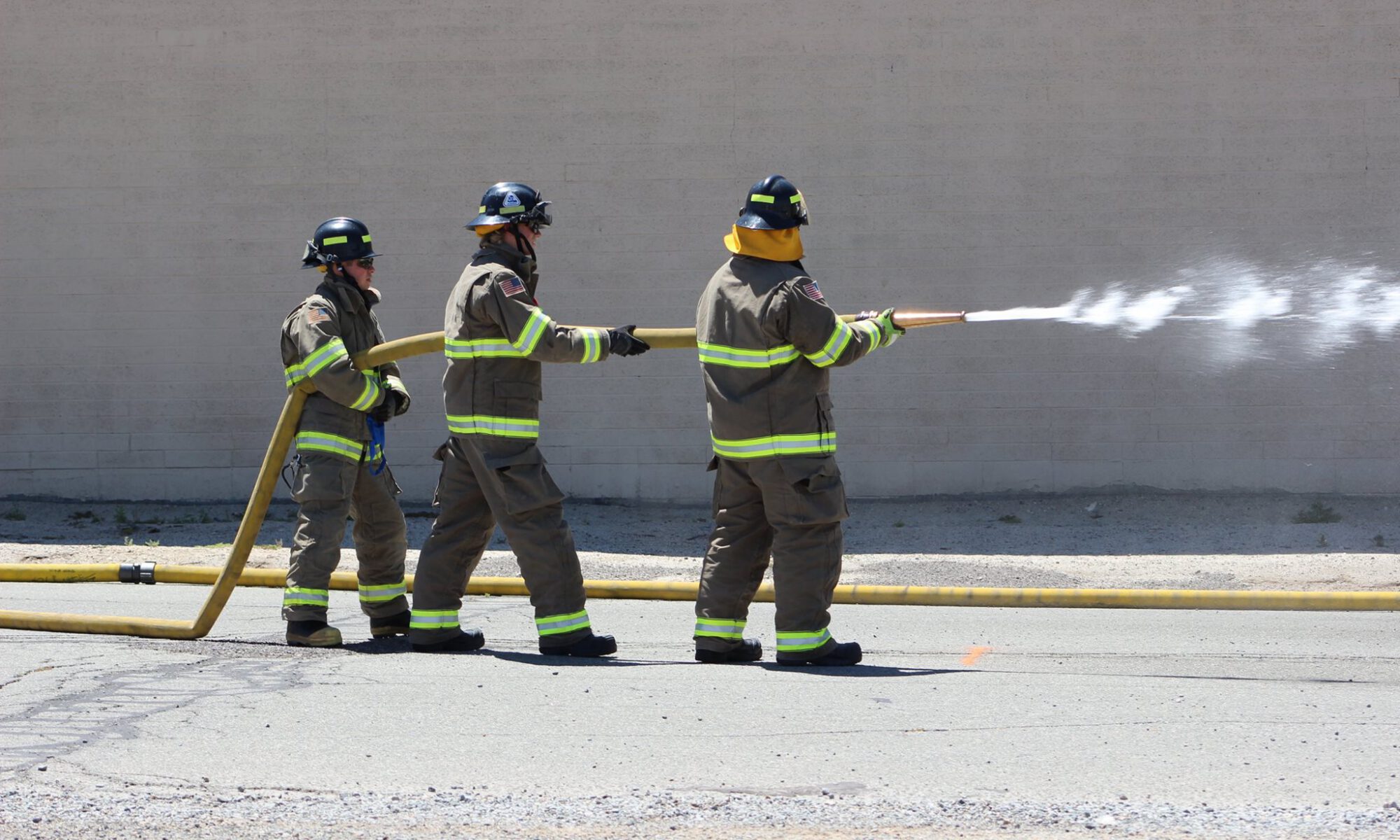
This is a H.O.T (hands on training) where our instructors showcase the extreme ease and versatility of flat load hose deployment.

If your department is currently using the flat load or you are interested in exploring the option and simplicity of this versatile load, this class is for you. The H&H cadre will systematically break down the flat load and its deployment options in a way that is not only user friendly but undeniable in its practical application potential.

Attendees will start their day with a mission and goal focused lecture and then transition to the training grounds where they will receive as many hose pulls as time permits accompanied by cadre demonstration and coaching.

The 5 Rights of the First Line

This is a 90-minute lecture/presentation based on a recently published article written by our cadre.

When the air break hits, we, as first due firefighters, have decisions to make, and we need to make them NOW! Are you making the right decision when it comes to hand-line selection and deployment?

5 Rights of the First Line is a class that helps break down that selection process for first due firefighters. This class will help solidify the current framework of this decision making process for even the most experienced firefighter. Stop wasting time, make a call faster by decreasing your cognitive load through systematic steps that are straightforward, and applicable at any fire.

RECENTLY FEATURED in Firehouse Magazine

Read the article!    https://www.firehouse.com/operations-training/hoselines-water-appliances/article/21161916/the-five-rights-of-the-first-line

Meet the Instructors!

JESSE HORTON-Firefighter

Jesse Horton is a Firefighter with a municipal fire department and has 19 years of experience in public service/safety. Jesse specializes in structural firefighting with a passion for leadership and mentorship. Jesse takes pride in educating himself and others on current progressive tactics and techniques, with a specific focus on hose deployment, hose management, fire suppression, and forcible entry.

Jesse is a tenured instructor whose work has been published in Firehouse Magazine. He uses his positive attitude and tireless energy to encourage others to work hard and succeed. Jesse is inspired daily by his passion for the fire service. In his free time, Jesse is an avid Jiujitsu practitioner and instructor.

BRYON HUNT-Captain

Bryon is a 30 year student of the fire service. Bryon currently works for a municipal Fire Department as a Captain. Bryon has spent the last three years assigned to the training division and, in his 23 years with the department, has held the ranks of Firefighter, Firefighter/Paramedic, Driver/Operator, and Captain.

Bryon has an unending passion for Training and Mentoring. He teaches both firefighting and special rescue not just for his department but for numerous agencies in our region. Bryon takes great pride in keeping up with modern tactics and skills. His greatest passion has been teaching the future of the Fire Service thru our Regional Fire Academy. Bryon has been an instructor and Academy coordinator since 2002.

Bryon stays inspired and motivated with his love for the Fire service and his passion for teaching others. In Bryon’s free time, he enjoys the outdoors, time on the water, and Union leadership work.

MICAH HORTON-Battalion Chief

Micah began his fire career in 2003 as a volunteer with Warren Engine Company in his home town Carson City Nevada. He was picked up with the Nevada Division of Forestry (NDF) as a seasonal Firefighter and as a Reserve FF/EMT with Central Lyon County Fire Protection District in 2004. In March of 2005, he was hired by Career Fire Department.

Micah has 21 years in the fire service and has held the ranks of Firefighter, Paramedic, Captain, and currently Battalion Chief. Each of these ranks has given him an opportunity to train and lead from many different angles. He has been heavily involved in the training and development of Firefighters and Fire Departments in the Northern Nevada region his entire career.

89th Annual Conference in Lovelock- Registration Open Now!!!!


EMS CEU’s added as additional training @ NSFA 2024

Instructors

Jamie Carlson : Jamie Carlson is a highly accomplished and dedicated individual with a rich history in the field of Emergency Medical Services (EMS). Her passion for EMS dates back to her childhood, where she was exposed to the world of emergency care. Even as a young child, Jamie could be found riding in ambulances and absorbing knowledge at the station, fostering a deep-rooted fascination with the field.

Since the beginning, her EMS career, Jamie has held various positions, showcasing her versatility and commitment. She has contributed her expertise to esteemed organizations such as Payson Fire & EMS, Santaquin Fire & EMS, Duchesne EMS, Juab EMS, and Dugway Proving Grounds EMS. Throughout her journey, Jamie has not only excelled as a Paramedic provider, but she has also made significant contributions as an instructor and program director.

Jamie’s extensive qualifications include National Registered Paramedic and certifications in both Utah and Nevada. Furthermore, she is an accomplished EMS Instructor, EMS Course Coordinator, and EMS Training Officer. Her passion for education has led her to instruct at prestigious institutions such as Utah Valley University, Steven’s Henagar College, and Mt Nebo Training. Currently, Jamie serves as the EMS Programs Director for Great Basin College, where she continues to shape the future of EMS professionals.

Beyond her professional endeavors, Jamie cherishes her role as a parent to four children and a grandparent to five grandchildren. In her leisure time, she embraces her love for the great outdoors, indulging in activities such as hunting, fishing, dirt bike riding, and waterskiing.

Jamie Carlson’s unwavering dedication, vast experience, and passion for EMS make her a highly respected figure in the field. Her tireless efforts to educate and train EMS providers have undoubtedly contributed to the enhancement of emergency care nationwide.

John Mittelman: John Mittelman, B.S., NRP John began his Career in 2000 working as an EMT/AEMT, John advanced his career by getting his Wildland Fire Certifications in 2003 and working for a few years as a wildland firefighter.

In 2006 he completed Paramedic School followed by Fire I & II and began his career as a Paramedic Firefighter in 2007, eventually working his way to the position of EMS Chief in 2020 for Dugway Proving Ground.

Throughout his career John has been dedicated to teaching the upcoming generations in EMS and now works as the Lead Paramedic Instructor for Great Basin College.

Program Highlights

Emergency Response to Multiple Casualty Incidents for EMTs/First Responders

This course equips EMTs, First Responders, and Firefighters with vital skills to handle traumatic and medical emergencies in multiple casualty incidents. Covering scenarios such as structure fires with burn victims, active shooter situations, explosions, and motor vehicle crashes, the training focuses on rapid assessment, triage, and treatment. Participants will engage in hands-on exercises to enhance their ability to effectively manage chaotic environments and save lives.

Classes

Rural EMS: The Importance of Community and Overcoming Resource Challenges

This presentation will address the unique difficulties faced by rural emergency medical services, including longer transport times and limited resources. It emphasizes the critical role of community support and engagement, strategies for maximizing available resources, and innovative solutions like telemedicine. The presentation highlights the importance of training, collaboration, and mental health support for EMS personnel, aiming to enhance emergency response and healthcare access in rural areas.

Wilderness First Responder Part 1

In the first half of this Wilderness First Aid (WFA) course, participants will be introduced to the essentials of WFA, covering fundamental principles and patient assessment. The session will cover the importance of WFA, and differences between wilderness and urban first aid. Participants will then learn about scene safety, primary and secondary assessments, and effective patient examination techniques. This part also includes practical scenarios for managing common wilderness injuries such as fractures, wounds, and burns. This section will also cover the moving of patients and how to create liters and splints with the supplies that are available.

Wilderness First Responder Part 2

The second half of the WFA course delves into handling environmental hazards and emergency preparedness. Participants will address animal bites, plant poisoning, and natural hazards, learning to create emergency action plans and build first aid kits. The course then focuses on improvised first aid techniques and evacuation strategies. Realistic scenarios and simulations provide hands-on practice in patient care and decision-making. At the end of the course the participants will be encouraged to participate in a mini moc disaster and to apply the principles and concepts that they have learned. The session concludes with a review of key concepts, a Q&A, and feedback, ensuring participants are well-prepared for wilderness emergencies.

Patient Assessment Review for the EMS provider

This course is designed to give a detailed review of patient assessment techniques for EMS providers at all levels, including first responders, EMTs, AEMTs, and paramedics. The course will cover all aspects of patient assessment, from initial evaluation to key assessment techniques, ensuring a thorough understanding of each step. The lecture portion provides a comprehensive review, while the hands-on component reinforces learning through practical application. By the end of the course, participants will be equipped with enhanced skills and confidence to perform accurate and effective patient assessments in real-world scenarios.

Medical emergency or overdose, how they present and what providers are looking for.

This lecture will provide a comprehensive overview of medical emergencies and overdoses. Focusing on the different presentation of patients and the critical indicators that providers should attend to. Attendees will learn to recognize symptoms, understand the underlying mechanisms, and apply appropriate first response actions. By the end of the course the student will be able to understand the different street drugs, the overdose presentations that correlate with the drugs, and what medical emergencies may mimic drug overdoses.

Registration is Open Now


2023 Training Conference -Course Highlight

Stress, First Aid & How To Effectively Regulate Your Nervous System

The last few years have been filled with many stressors. This class will help you to identify stress reactions in yourself and others. It will offer a flexible evidence-based framework where you will identify your own strengths when it comes to managing stress, so that you can develop an effective stress management plan that is tailored to your unique needs. In addition, by participating you will learn ways to efficiently regulate your nervous system and practical tools will be shared that can be used for yourself and with your peers during times of stress.

2023 Conference Course Highlight- P.A.C.E

Using the P.A.C.E Model (Primary, Alternate, Contingency, and Emergency)

A Strategic Assessment builds on our Situational Awareness and helps build and maintain the team’s Common Operating Picture (COP) when shared throughout the incident, including the crucial transition periods involving mobilization, operational planning, in briefing / shadow periods, transitions, and transfer of command.

Once a new strategy is selected is must be communicated by the Command, IMT responders, cooperators, and the public. Courses of action, briefings, and products must be adjusted to align with the updated strategy. A variety of options exist for displaying and briefing the strategic plan. The following are examples.

This class will increase your awareness, planning, strategic thinking and thinking beyond the initial actions.

—————————–

This class is being taught by Chief Matt Petersen of the Elko County Fire Dept. Chief Petersen has a long and diverse Fire Management in all risk and wildland experience background including Elko County Fire Protection District, Elko County Emergency Management, US Bureau of Land Management, US Forest Service, US Fish and Wildlife, Nevada Division of Forestry as well local government and volunteer organizations. Chief Petersen has successfully implemented a positive working relationship with other Federal, State, County, Local and private cooperators. Chief Petersen has worked on Engine (wildland/ all-risk), Handcrews, Helitack and Prevention modules. He was a type 3 Incident Commander for one of the Nevada Type 3 incident management teams, Team 4. He has worked on a California Type 2 IMT as a qualified Division Group Supervisor and as an Operations Section Chief Type 2, and for 4 years he served as a Division Group Supervisor on a California Type 1 IMT.

2023 Conference Course Highlight- Extrication

As automobiles are ever changing, extrication techniques and technology must evolve with them. This 8-hour course aims to inform participants on the most up-to-date extrication methods on all types of vehicles. The first 4-hours will be spent in a class discussing best extrication practices on vehicles from “Prius’s to Peterbilt’s”. Followed by a 4-hour H.O.T (hands on training) class. The class will also feature a section on electric vehicle extraction and fire suppression. This training will require full PPE minus a SCBA and will be limited to 18 participants.

Tyler Huff will be teaching the course. Tyler Huff has been in the fire service for 7 years; the last four being with The City of Elko Fire Department. The fire service is his passion and he firmly believes that being a firefighter is the best job in the world. Tyler began his fire service career by obtaining an associates of applied science at TMCC and a AEMT license. When not running calls you can find him with his bird dog, doing snow sports, or at the golf course.

Conference Course Highlight

Command, Leadership, and Introduction to Chaos

The course is designed to expand the knowledge of theory and framework for the concepts associated with Leadership in the Fire Service. Participants will review shortfalls that the traditional ICS model tries to employ on every incident and introduce alternatives concepts. There will be an introduction to the “Calm the Chaos” course and review basic concepts to running a division on a structure fire.

The course will be taught by Elko Fire Department’s Chief Johnston. Johnston has 23 years of experience in the Fire Service. He is a credentialed Chief Fire Officer, Chief Training Officer, and Chief EMS Officer with the Center for Public Safety Excellence. Chief Johnston has a Master’s of Science in Emergency Management, Bachelor’s in Fire Administration, Fire Technology, and Psychology and is a Paramedic.

“Railroading 101”-An Introduction to Railway Emergencies

As the conference gets closer, we will begin to highlight some of the instructors and courses that are being offered.

The first of these is called “Railroading 101”. This course will help first responders to understand railroad response, contacting the railroad, understanding shipping documents, rail equipment, general rail safety, and response assets.

This course is being taught by Jake Hammer who currently works for Union Pacific. Jake has over 13 years in both the Fire Service and the Hazmat field. Currently Jake has been the Hazmat Manager over the Rocky Mountain service unit for 7 years. In that time managing some of the largest derailments across the Union Pacific system.

For more information, please visit the annual training conference tab under training on the NSFA website!